

A hero is only as compelling as his villains. In the case of the Series Sherlock, a great villain has to be as brilliant as the titular consulting detective. The 6 Best Episodes of Sherlock offer the most genius, psychotic, and diabolical adversaries challenging Sherlock Holmes (Benedict Cumberbatch) to his greatest mysteries (or “Games”).
If you missed Part 1, Sherlock: Every Episode Ranked #13-#7, you can read that HERE.
SPOILERS through the final episode of Sherlock follow.
Now… On to the Top 6 Episodes of Sherlock!
6. ‘His Last Vow ‘- Season 3, Episode 3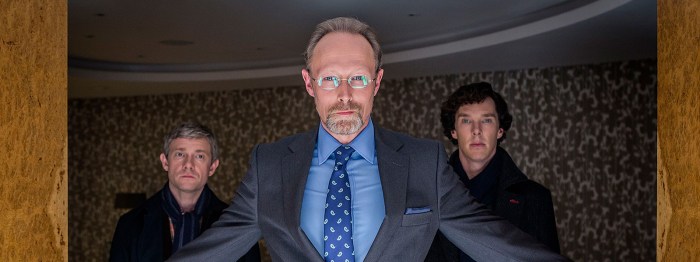 Charles Augustus Magnussen (Lars Mikkelsen) is the first strong villain to follow the death of Moriarty, which took place 3 episodes (or a whole season) earlier than ‘His Last Vow.’ Magnussen is a master of due to Applegate, his luxurious compound where he keeps compromising material on everyone from members of the British Government to John Watson’s (Martin Freeman) new wife Mary (Amanda Abbington). Why Mary? Well, because she’s actually a Super-Spy with a dark past that threatens to unravel her marriage with John. The twist comes when Sherlock and John finally arrive at Applegate, only to learn that Magnussen keeps all his blackmail material in his head; his “mind palace,” the same device Sherlock uses to catalog all the information necessary to solve any case. This doppelganger aspect is a valiant attempt to create a strong villain in a post-Moriary world. In the end, Magnussen’s biggest threat to Sherlock becomes the blood on the great detective’s hands following his shooting Magnussen in the head to protect Mary’s secrets.
5. ‘The Lying Detective’ – Season 4, Episode 2 ‘The Lying Detective’ (a play on Arthur Conan Doyle’s story, ‘The Dying Detective’) presents a villain, Culverton Smith (Tobey Jones), who shares little more than a name with the source material. In the story, Smith is a killer, but expanded to a philanthropist serial killer for the episode . Separated from John after Mary’s death in the previous episode, ‘The Six Thatchers,’ Sherlock is brought a mystery by the “daughter” of Culverton Smith. She recounts the time her father drugged her and his closest colleges in order to tell them he wanted to kill “Somebody.” Said mystery is solved in the most entertaining and visual manor since ‘His Last Vow,’ recognizing Sherlock‘s strengths. It turns out “Somebody” means “Anybody” and Sherlock, while literally dying due to a drug-bender brought on by boredom, decides to confront Culverton directly, in public. A glorious, verbal game of cat-and-mouse ensues right in front of unknowing, innocent people without them realizing Culverton and Holmes are discussing the fact Smith is a serial killer. Very formidable and clever, indeed.
4. ‘A Scandal in Belgravia’ – Season 2, Episode 1 In Arthur Conan Doyle’s stories Irene Adler (Lara Pulver), aka “The Woman,” leaves the most lasting impression on Sherlock’s life, aside from Dr. Jim Moriarty. First appearing in the short story ‘A Scandal in Bohemia’ (hence the name of this episode), Adler is the only woman to “beat” Holmes. Adler is the closest thing Sherlock has to a lover or significant other, using her sexuality as a weapon before eventually warming up to him as just in time for Sherlock to exploit her affection to outsmart her. Let’s just say the never consummate the relationship. Of course, when her password is “I Am SHER-Locked,” there is certainly some sort of sparks between the two master-minds. Great mysteries with fantastic deductions speckle the episode, with Moriary makes a fleeting, yet very welcome and classic appearance.
3. ‘The Final Problem’ – Season 4, Episode 3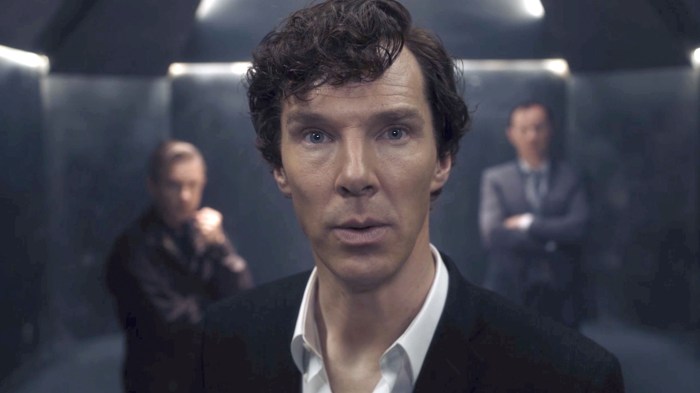 Though the title comes from the original story where Moriarty and Holmes fall to their “death” from the Reichenbach Falls, the episode of the same name features the beyond terrifying Eurus Holmes (Sian Brooke), sister to MyCroft (Mark Gatiss) and Sherlock, and invention of Gatiss and Steven Moffat. Eurus was locked away at such a young age that Sherlock can’t remember his sister/blocked all memories of her, due to a heinous crime relating to another of the series’ long-standing mysteries, “Redbeard.” The most brilliant (and most disturbed) of all three Holmes siblings, Eurus has been locked away nearly her entire life, but manages to trick Sherlock, Watson, and even Mycroft to confirm her incarceration by coming to her at the super-secret, isolated, extreme security prison of Sherrinford. Eurus has set a trap, with the help of Moriarty, five years previous, subjecting the unlikely trio to a maze of mysteries within the maximum security prison at a pace only matched by ‘The Great Game.’ These challenges serve as Moriarty’s “Final Problem,” testing Sherlock’s deductions, relationships, and even emotions. Andrew Scott gets to reprise Sherlock’s greatest adversary, if only in flashback form, and it is glorious! I love the intensity of the episode, with the highest stakes of the series and the great challenge of Sherlock’s most personal and (possibly) final villain. The reveal that Redbeard wasn’t Sherlock’s lost dog, but his best friend, murdered by Eurus during their childhood is heartbreaking. On the other hand, the greatest treat ‘The Final Problem’ delivers is watching the usually cold Mycroft interact and modify the dynamic of Sherlock and John, humanizing him in the process and proving he is actually weaker than his younger brother.
2. ‘The Reichenbach Fall’ – Season 2, Episode 3 Dr. Jim Moriarty. There has never been a stronger TV villain than Andrew Scott’s completely unique take on one of history’s most classic fictional villains. ‘The Reichenbach Fall’ serves as a reference to the waterfall where Moriarty and Sherlock plunged to their deaths together in the original story, ‘The Final Problem.’ In fact, the scene is recreated in modern times by playing out on a roof at the end of the episode. Though ‘The Reichenbach Fall’ offers a pretty solid mystery: How did Moriarty steal the Crown Jewels while also opening the vault at the Bank of England and all the cells at Pentonville Prison? And… does Moriarty even exist at all? As Sherlock solves a series of mysteries not unlike the next episode on the list, for the first time, he becomes a suspect and goes on the run until he can prove Moriarty is not a figment of his overactive imagination. No other episode features more Moriarty than this episode, and every frame is an absolute delight. I really do think Andrew Scott is the break-out actor of the series, even more than the amazing Benedict Cumberbatch.
1. ‘The Great Game’ – Season 1, Episode 3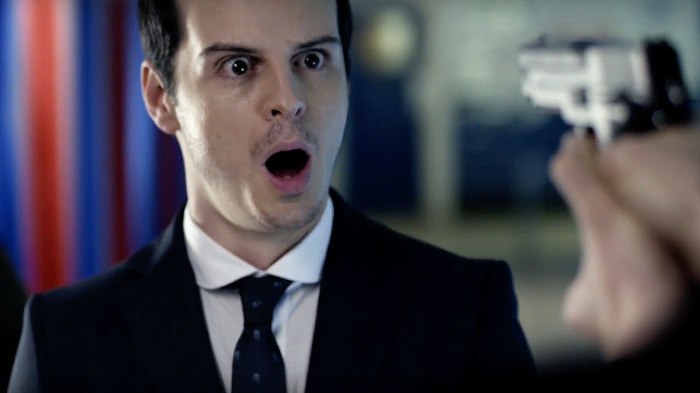 ‘The Great Game,’ the final of Season 1, is by far the strongest, most face paced, most clever and entertaining episode of the entire series of Sherlock. Before he even knows who is behind this ultimate “game,” Sherlock rushes from case to case with much excitement, ranging from a mystery from his childhood to several in which he needs to aid of his allies who fill in the blanks that Sherlock’s Mind Palace doesn’t have room for. Any of these mysteries on their own would make for a great episode, but with so many in quick succession, we get to see the full of extent of what “Play Time” looks like to the world’s greatest detective. Though Moriarty doesn’t make an appearance until the last scene, the build-up is well worth the wait, as we get our first look at the aforementioned unparalleled performance Andrew Scott brings to the world’s 1st Consulting Criminal. The essential episode of Sherlock!
That’s all… for now. Moriarty will likely never return, but there is a chance that eventually, we may see more Sherlock Holmes and John Watson in a potential, but not assured, 5th season.






 Best straight-up zombie movie. Period. Danny Boyle’s zombies even more frightening than the traditional model, capable of incredible speed, the ability to walk up stairs and climb ladder, and infecting others in seconds by spitting blood at them, in addition to the classic bite. The opening sequence with a completely abandoned London is an astounding image that is hard to forget. Finally, the most important rule of zombie movies is present: the zombies aren’t as dangerous as the other survivors (especially the military). Bloody good scares.
 My list is full of horror/comedy hybrids. Even the most traditional of horror movies on this contains some laughs (except for 28 Days Later). I don’t always watch horror, but when I do, I like it with a splash of comedy. Sam Raimi’s Evil Dead trilogy set the standard for full on horror with some ridiculous laughs, with the 1st film arriving in 1981, predating any of the other movies on this list. The third film, Army of Darkness wasn’t released until 1992 and it upped the comedy considerably from even the grossly hilarious Evil Dead 2. Never has someone uttered as many delicious one-liners than Bruce Campbell as Ash. There are skeletons, possessions, graveyards, and not just evil mini versions of Ash… but an actual full-sized Evil Ash (or “Bad Ash”). Raimi’s unique style oozes throughout the film; his own little quirks are nearly as recognizable as Tim Burton’s.
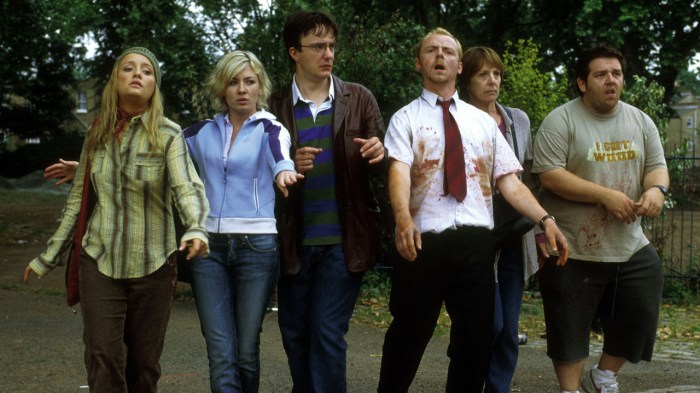 Shaun of the Dead (like all Edgar Wright/Simon Pegg collaborations),puts comedy 1st, yet still plays by all the rules of the genre. Shaun of the Dead is not a parody of zombie movies as much as it is love-letter to the genre with comedy. It’s the movie that put director Edgar Wright and actors Simon Pegg & Nick Frost on the international stage, leading to other amazing parody/homages Hot Fuzz and The World’s End, so you know it’s good! Not as terrifying a zombie movie as 28 Days Later, but still full of scares… balanced gently with laughs.
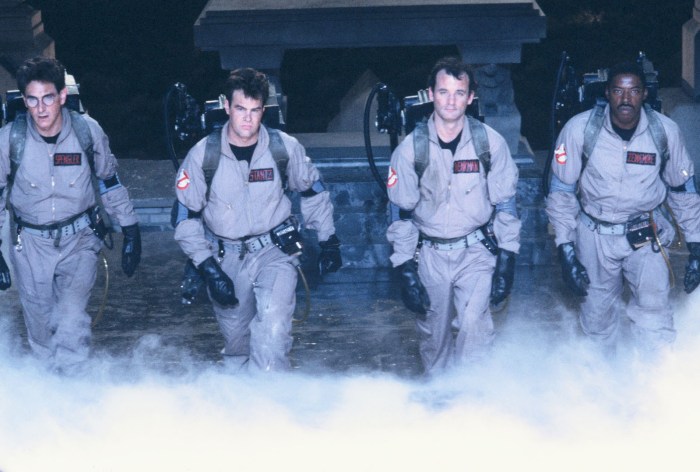 The original Ghostbusters from 1984 is a given, especially on a list with a comedy twist. Like Shaun of the Dead, this classic was conceived as a comedy movie first, but went on to embrace paranormal scares with great special effects… at the time. It’s not the scariest movie about ghosts, but it is the most iconic. You don’t need to sold on this one; Ghostbusters is a true Halloween Classic with hilarious performances by Bill Murray, Harold Ramis, Dan Aykroyd, and Ernie Hudson.
 It’s a Halloween Movie! And a Christmas Movie… but totally a Halloween Movie! My boss says it is just a Christmas Movie, but he is wrong. Dead wrong.
 Besides 28 Days Later, the Scream films (ONLY the 1st two!) are the most full blown horror movies on my list. Scream was a game-changer for the genre in the 90’s; a horror movie that was so meta it had a character literally explain the rules of a horror film. With this level of self-awareness, the first two Scream movies were able to subvert said rules, providing plenty of fright misdirects while still delivering on the gory promise of a slasher film. No one is safe! The fact this formula worked two times is a testament to the sequel, which was able to feel fresh and bring “the rules of a sequel” into the mix. Scream‘s not a respectful parody like Shaun of the Dead, but rather a full-on horror flick with A+ scares, blood, and that self-aware twist.
 Cabin in the Woods came along in 2012 and took Meta to the next level! Co-Written by the great Joss Whedon, Cabin in the Woods also introduces all the rules only to subvert them. There’s an order in which each archetypal character must die (the jock, the loose girl, the stoner, the virgin… etc), but that doesn’t mean it’s followed. Cabin in the Woods take this idea of extreme self-awareness a bit farther, dissecting not just one horror sub-genre, but instead examining the many types of scares that cross cultures. Best of all, the film is half horror cliches and half office workplace comedy. It’s impossible to explain without spoiling the movie, but let’s just say it’s just as interesting watching Richard Jenkins and Bradley Whitford go about their extremely odd and disturbing job as it is watching Chris Hemsworth and friends try to survive in their cabin in the woods.
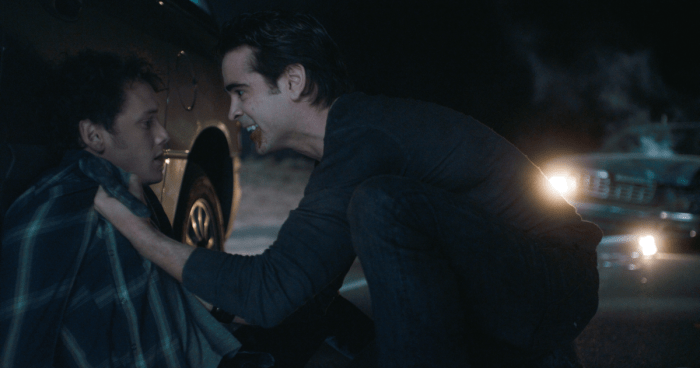
 Oh, 2011’s remake of Fright Night, you would be on so many people’s Halloween lists if anyone had seen you. You’re forgotten, not bad.
 Three Halloweens ago,
 In both the films and the comics, Catwoman is played out. She is not be the only prominent character who’s had more than one cinematic go-around (Harvey Dent/Two-Face has had 3 cinematic incarnations, if you count Billy Dee Williams’ 5 minutes as Dent in Batman), but we have seen her four (4!) times: Adam West’s Batman, Batman Returns, Catwoman, The Dark Knight Rises. Making matters worse, the latest version (Anne Hathaway) was forgettable, incorrectly characterized, and poorly used overall. “Don’t you want to see her done right?” you may ask. “No, not this character.”
 No, this isn’t a sexist list. In fact, it’s the opposite, as the two female characters are not among the three I want to see the least! The three I really don’t want to see are all total bros.
 Batman will have spent plenty of time with allies by the time we get to The Batman. He worked with Superman and Wonder Woman in the climax of Batman V Superman: Dawn of Justice and he’s just one in a crowd of several more powerful heroes in 2017’s Justice League. He already has the required Gordon and Alfred on his side. While I wouldn’t mind adding Harvey Dent (the DA, not the criminal boss) as a supporting character, I want to see Batman physically fight crime on his own for the first time in the DCEU. Leave the team-ups to the multiple Justice League movies they will make.
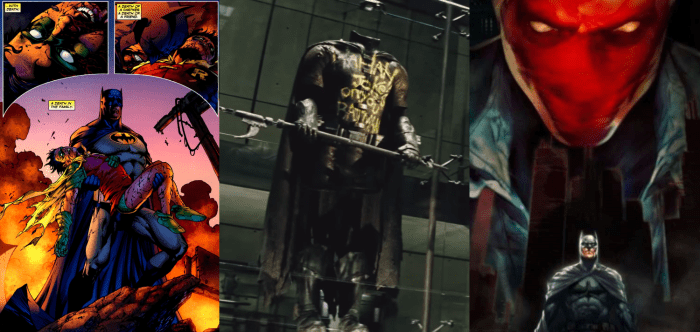 I just don’t want these movie to get crowded with too much history and complicated relationships!
 I don’t like this version of the Joker, I just don’t. I don’t like the Gangster angle and Jared Leto made the strangest choices. They were brave, like Heath Ledger’s, but it backfired for Leto. Normally I would say the Joker should be in at least one of each Batman Actor’s films, but honestly, I never want to see Jared Leto’s Joker in the DCEU ever again.
 Best part is, about half the pictures on Google Images are of Goggins laughing.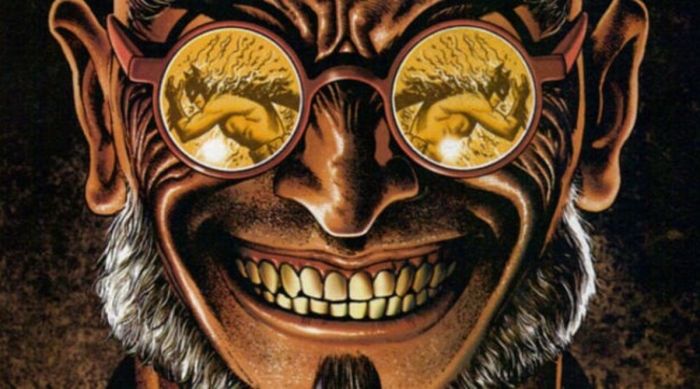


 Strange would work particularly well with Deathstroke. Deathstroke’s origin could be tweaked so he is less a mercenary and more a product of Hugo Strange’s hypnosis and obsession, just like Night-Scourge. Or, if Strange is head of Arkham in the DCEU, he could also be responsible for releasing Deathstroke to do his dirty work. It would be fun to watch a movie where there is the actual threat of Batman’s secret identity going public, and, if Deathstroke had said information it would make him an even bigger threat for the Dark Knight.
 The Court of Owls were introduced as one of the first villains in 2011’s premiere of DC Comics’ “Reboot,” The New 52. Created by writer Scott Snyder (not Zack!) and artist Greg Capullo, the men behind nearly all issues of the incredible New 52 run of ‘Batman,’ The Court of Owls are an organized crime group and secret society the likes of which Batman has never faced. Organized crime is nothing new in Gotham, but the Court has secretly controlled Gotham since Colonial times. Made up of Gotham’s oldest and wealthiest families, they have used money and political power to shape Gotham to their liking, having an even greater influence on the city than the legacy of the Waynes. Completely unknown to Gotham’s great protector Batman and his alter ego Bruce Wayne who seeks to improve his city with his fortune, they have bases and hideouts based all over the city, even in Wayne structures. Their existence is but a fairy tale to even Bruce, living on mainly though a nursery rhyme:
 Talons are their deadly assassins, basically an army of undead soldiers selected by the Court of Owls over the centuries, kept in a “deep sleep” until needed. When called upon, this army is dangerous indeed, not stopped by bullets, knives, or most of Batman’s tricks, because… well… I did say they were, “basically undead.”
 Unlike the Court of Owls, Clayface has been a Batman mainstay for over 50 years. In that span of time, there have been many versions Clayface, but my favorite representation was how he was interpreted for Batman: The Animated Series in the 90’s. Without going into every version of the character, Basil Karlo is a well known actor (often presented as washed up or recently fired) who undergoes an experiment/accident that leaves him in the form of a giant mud monster. The powers that come with such a transformation give him super-strength and the ability to shape-shift to impersonate anyone; Batman’s friends and foes, or even Bruce Wayne himself!
 Clayface could be used a number of different ways with Deathstroke. He could pose as a fake Bruce Wayne after Deathstroke takes Batman out of the picture (for a time, Batman obviously comes back and wins in the end). He could be a secondary villain who torments Batman between Deathsroke attacks, or even serve as the villain Batman fights in the opening act, before Deathstroke is on the scene. He could even be an ally to Batman, like in this year’s run of Detective Comics following the latest “Soft Reboot,” Rebirth, becoming Bruce Wayne or Batman to serve as a false target for Deathstroke. The possibilities are nearly endless when the people Clayface can become are.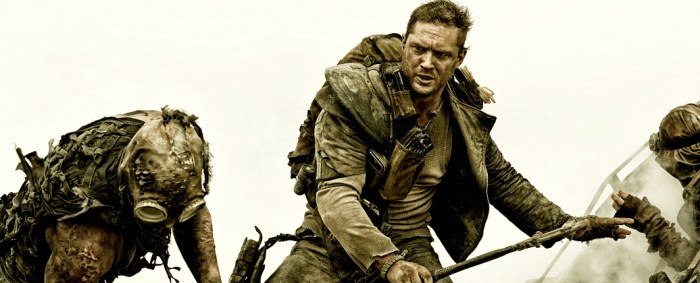
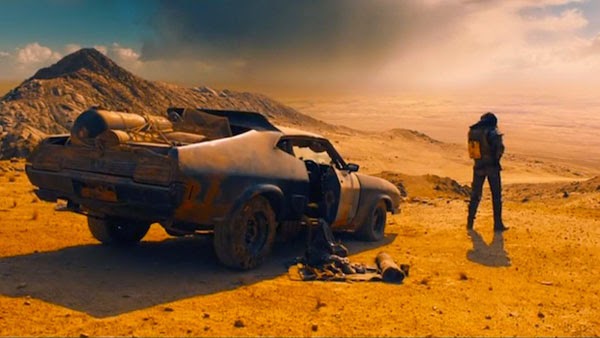




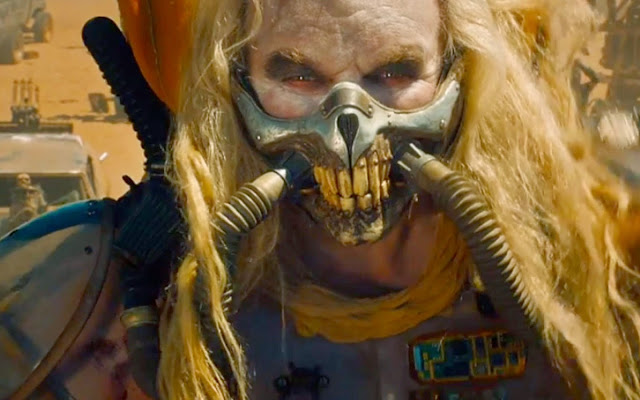


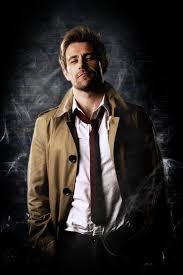
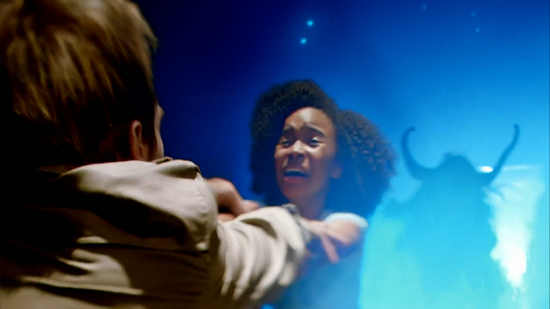
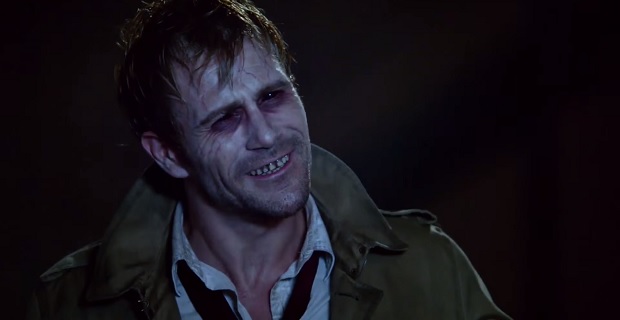

 all the good, the bad, and his torment/mission, as a man, I still want to be John Constantine. Rock that white shirt and that loose-ass tie… TV’s John Constantine is one cool anti-hero.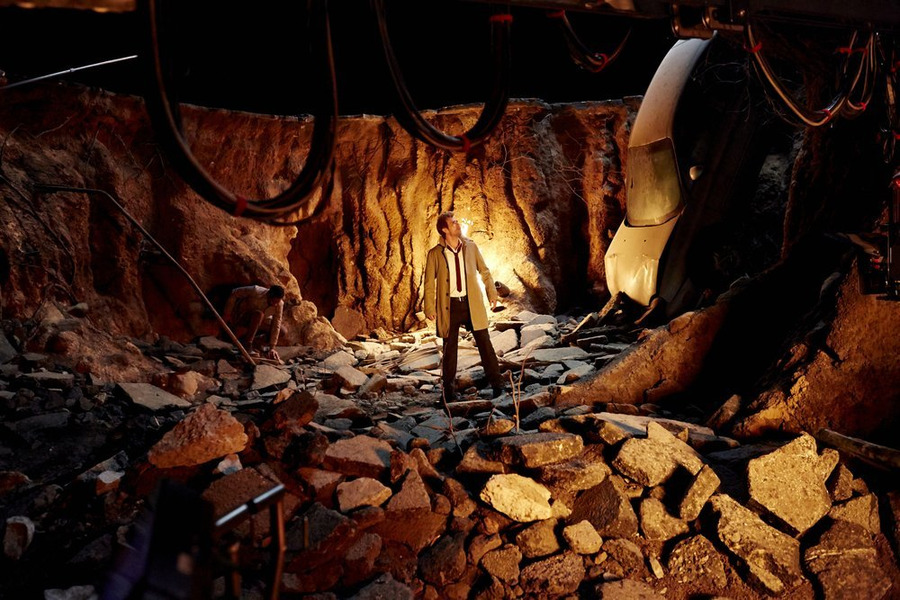




 BREAKING GEEK Radio: The Podcast