
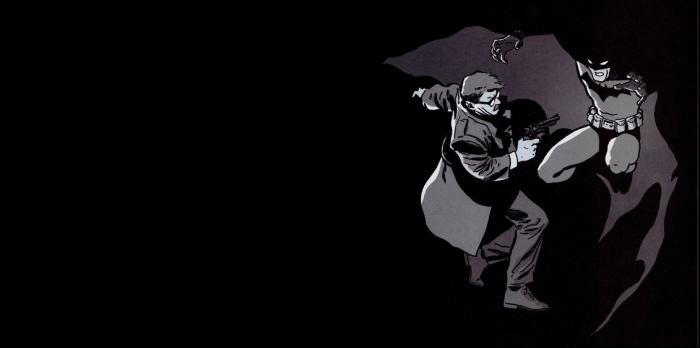
 As I sit here, watching Batman Begins for the third time this week, I am amazed.
I’m not amazed that I can watch a movie three times in the same week, as I’m sure I’ve done the same with Fight Club and Raiders of the Lost Ark at some point in my development. I’m not even amazed that I actually enjoy a Batman movie after Batman & Robin mangled the brand.
I’m amazed that a comic book movie… hell… any mainstream Hollywood movie can be so well crafted, with such care and depth given to the film’s many themes and characters.
There have been plenty of great comic book adaptations over the years from Spider-Man to Iron Man, Captain America to Kick-Ass, but as good as those movies are, they don’t come anywhere near the caliber of Batman Begins and The Dark Knight.
Sure, Spider-Man nailed the superhero movie formula, and Iron Man duplicated it nicely, but Christopher Nolan’s Batman films aren’t just entertainment for the masses, they’re socially important films dealing with some lofty themes including fear, corruption, justice, and legend.
Though The Dark Knight is infamous for Heath Ledger’s performance and the sheer scope of the epic tragedy of Harvey Dent, Batman Begins is actually, in my opinion, the better written film of the two. For that reason and because it does come first chronologically, I will start with the 2005 film.
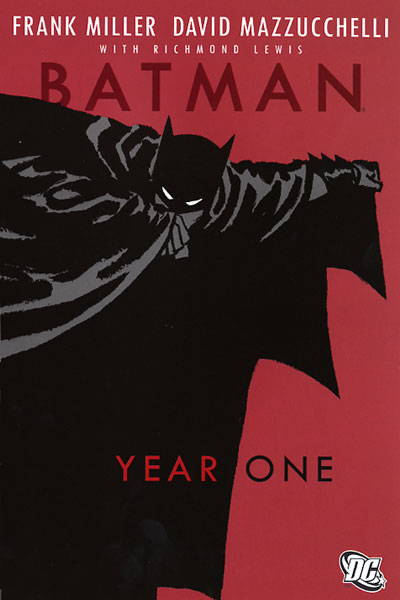 Having recently read Batman: Year One by Frank Miller and David Mazzucchelli and Batman: The Long Halloween and its followup Batman: Dark Victory by Jeph Loeb and Tim Sale, I have an entirely new appreciation for Nolan’s masterpieces (yes, I consider them even better than Inception or Memento).
Begins is also all the more interesting to watch after seeing the first two trailers for The Dark Knight Rises, as director/writer Christopher Nolan assures us that film will take the trilogy full circle back to Begins.
In Year One, Miller has Bruce Wayne returning to Gotham after twelve years, the same day that Police Lieutenant James Gordon arrives after being reassigned to the most corrupt city in the world. In Nolan’s movie, Gotham is also referred to, by Ra’s al Ghul, as the world’s “greatest city,” so I guess the best way to describe Batman’s hometown is New York meets Chicago.
From the beginning, Wayne and Gordon’s differences are apparent. Gordon arrives on a crowded train whilst Bruce flies in 1st class, met at the terminal by reporters. Gordon is met by his new, very corrupt partner, Arnold Flass.
Now, Nolan’s first Batman film is a sort of hybrid of Year One and Long Halloween with some of his own magic mixed in. In the film, Bruce meets Gordon when he is a child, after his parents are murdered in front of him. Gordon is the police officer who comforts Bruce, draping his father’s coat over his shoulders and telling him “it’s okay” as Commissioner Loeb tells them the good news, “we got him, son.” That is, they have apprehended, Joe Chill (I still think that name sounds like he’s a mascot who sells cigarettes to children). “Justice” has been done.
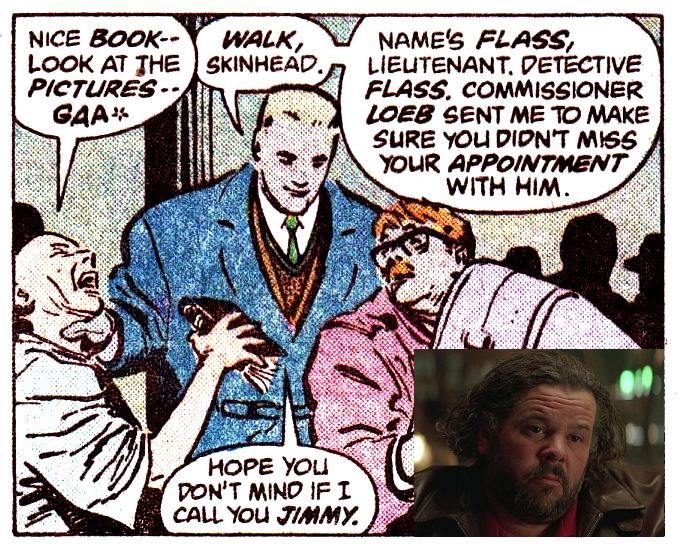 Likewise, Flass has been transformed from Miller’s all-american Green Beret trained giant of a man to a fat slob in Nolan’s film. Still, his role remains the same; he is Gordon’s corrupt partner, on Falcone’s payroll, one of the many cops on the take that cloud Gotham’s justice system.
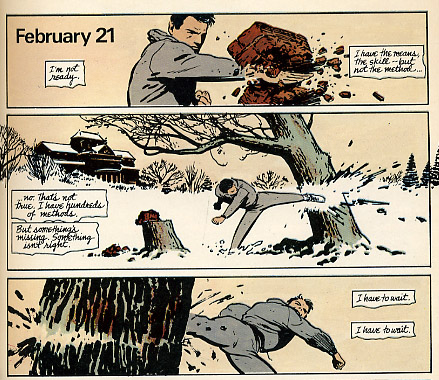
Year One doesn’t go into Wayne’s preparation much, only showing him training on the grounds of Wayne manner, commenting how he’s waited eighteen years, but he’s still “not ready.”
“I’m not ready. I have the means, the skill — but not the method… No. That’s not true. I have hundreds of methods. But something’s missing, something isn’t right. I have to wait. I have to wait.”
The most valuable addition Nolan brings to Batman’s universe is tying all sorts of loose ends together. In Begins, we see where Wayne spent the years between the hit on Joe Chill and his return to Gotham. He has lived among the criminals, studied their methods. He was then trained by the Henri Ducard from the League of Shadows to be fight, be invisible, and to conquer his own fear.
Wayne returns to Gotham, in Begins on a private plane, aware will not simply be a vigilante, but something more.
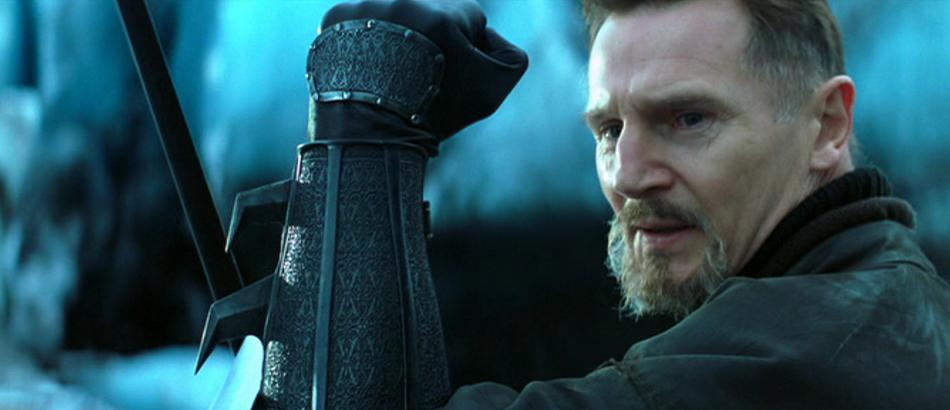 As Ducard says to him when they first meet in Wayne’s jail cell:
“A vigilante is just a man lost in a scramble for his own gratification. He can be destroyed or locked up. But, if you make yourself more than just a man, if you devote yourself to an ideal, and if they can’t stop you, then you become something else entirely… Legend, Mr. Wayne.”
Fear is a theme in Year One, but Nolan brings it even more front and center in Batman Begins, making it the film’s most foremost theme.
In Year One, Bruce picks the bat as a symbol because he recalls it frightening him as a child.
“Without warning, it comes… crashing through the window of your study and mine… I have seen it before… somewhere… it frightened me… as a boy… frightened me… yes father. I shall become a bat.”
 We see the incident in question in Begins, with young Bruce falling through a covered up well and into the batcave where he encounters hundreds of the creatures, tramatizing him for life… until the League helps him conquer such fear. The image is repeated throughout the first act of Begins from the play he sees with his parents to the bats that fly out of the chest during the League’s final test.
Just as the bat crashes through a window in Year One, bringing Bruce to his epiphany of the symbol he will use to put fear in the hearts of his enemies, in Begins a Bat gets into Bruce’s study as he researches which cops he can trust. Again, epiphany: the villains of Gotham will share his fear of bats.
Of course, by this point in the graphic novel, Bruce has already attempted to fight crime once, with a fake scar instead of a mask. It doesn’t go that well with Bruce barely making it home alive to see that bat crash through his father’s study.
He was right, he was not ready. Without the symbol of the Bat, without the fear he strikes in others, Bruce Wayne was not ready.
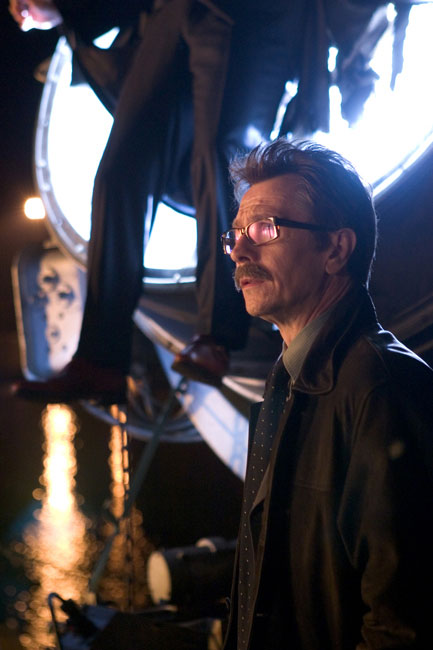 Now, one of the most striking differences between Year One and Batman Begins, is that the former is told from the point of view of Gordon and Bruce Wayne, whereas the movie mostly sticks us in Batman’s shoes. We see a scene or two from Gordon’s perspective, but it is generally Bruce Wayne’s film.
In future posts, I will go on to discuss The Dark Knight, where Nolan and co-story-writer David S. Goyer make James Gordon and Harvey Dent nearly as prominent as Batman.
In fact, by the time we get to Dark Knight, I would argue that the movie isn’t the story of the Batman vs. the Joker at all, but rather the tragedy of District Attorney Harvey Dent and the events he, Gordon, and Batman set in motion.
But, that is for another post, another night. I have much more to say about Nolan’s films, Year One, Long Halloween, and The Dark Knight Rises, so I hope you’ll return to Breaking Geek to delve into Batman with me.


 BREAKING GEEK Radio: The Podcast